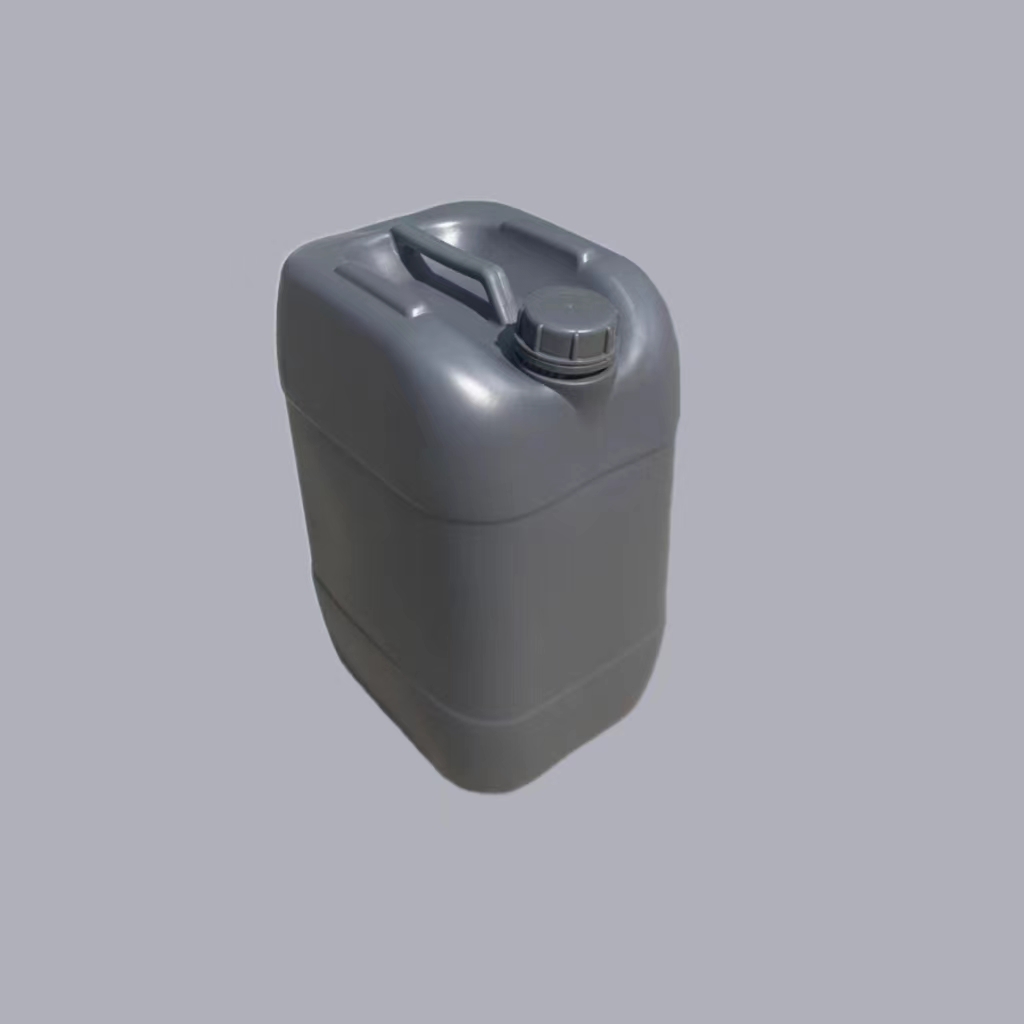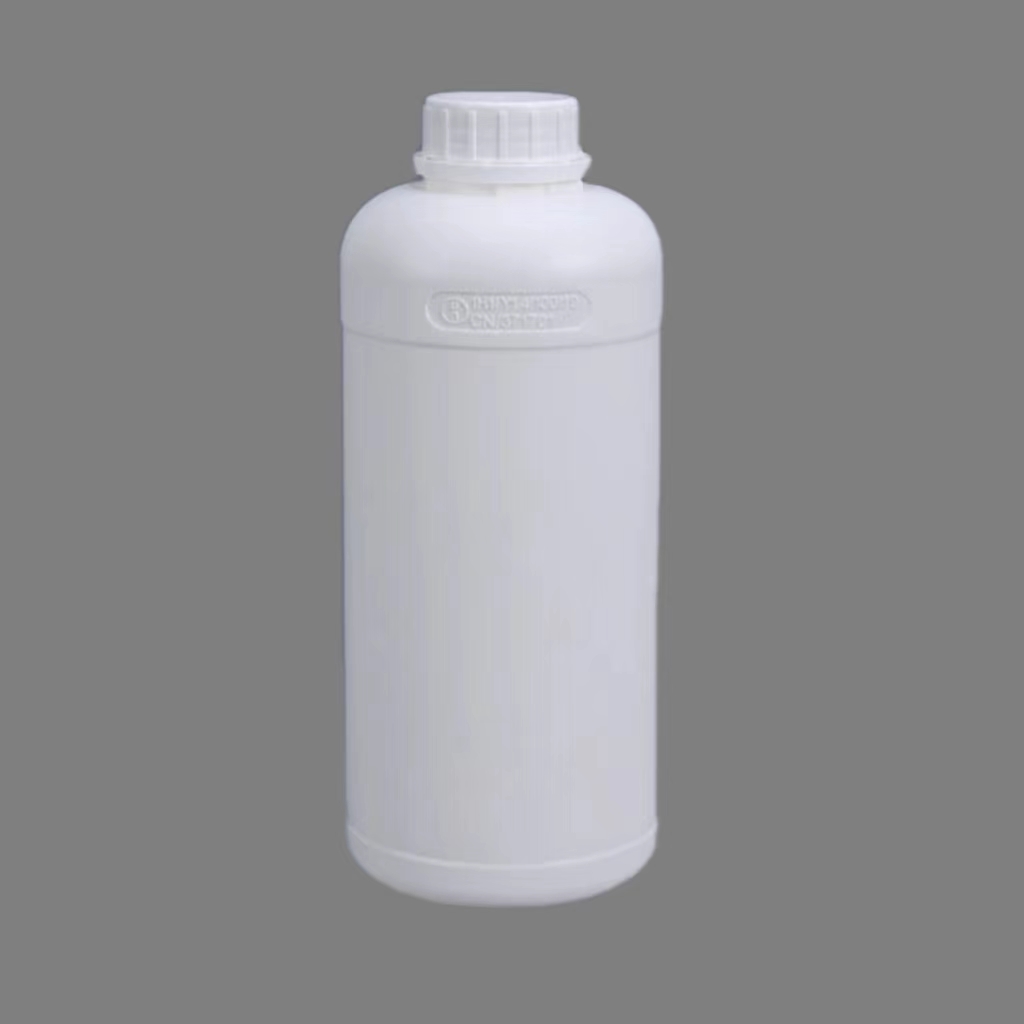

Castor oil glycidyl ether YLD-9003 is a vegetable-derived, trifunctional reactive diluent, CAS 74398-71-3. The product page gives an EEW of 500–650 g/eq and a viscosity of 250–500 mPa·s at 25 °C. It thins an epoxy mix without solvent and suits electronic potting, coatings and structural adhesives.
Castor oil is a triglyceride of ricinoleic acid, with one hydroxyl on each of its three fatty acids. Glycidylation puts the epoxide at the end of a C17 chain, so the cured network keeps a flexible segment that cannot migrate, unlike a non-reactive plasticizer.
The EEW carries the design information. At 500–650 g/eq against the 184–190 g/eq of YLE-128, the grade holds roughly a third of the epoxide density, so viscosity and crosslink density fall together. Taking a nominal triglyceride of 933 g/mol, the published range implies 1.7–2.2 epoxide groups per molecule rather than three. That figure is calculated and should be confirmed against the TDS.
Table 1. Values as published on the product page. The table states appearance only as a transparent liquid; the descriptive text calls it light yellow, and no colour index is published.
| Item | Specification |
| CAS No. | 74398-71-3 |
| Appearance | Transparent liquid |
| EEW, g/eq | 500–650 |
| Viscosity, mPa·s at 25 °C | 250–500 |
| Hydrolyzable chlorine, % | max. 1.5 |
| Inorganic chlorine, ppm | max. 10 |
| Epichlorohydrin residue, ppm | max. 10 |
| Water, % | max. 0.1 |
The hydrolyzable chlorine limit of 1.5 % is the highest among the site's diluent grades, while inorganic chlorine and epichlorohydrin residue both sit at max. 10 ppm. The pair indicates bound chlorine rather than free chloride, but an electrical grade should still be checked against the TDS.
Dosage follows phr = 100 × AHEW ÷ EEW. With YLH-9101 at AHEW 92 g/eq and YLE-128 at EEW 187 g/eq, the unmodified resin takes 49 phr, close to the 48 phr the hardener page lists. Adding the diluent raises mixed EEW, so hardener demand falls.
Table 2. Theoretical phr for 100 parts YLE-128 with increasing YLD-9003, calculated from published equivalent weights. No gel time or hardness was measured for these blends.
| YLD-9003, phr | Mixed EEW, g/eq | YLH-9101, phr |
| 0 | 187 | 49 |
| 10 | 199 | 46 |
| 20 | 211 | 44 |
| 30 | 222 | 42 |
The page lists electronic potting, coatings, construction adhesives and adhesives, plus better filler wetting and low volatility. A loading of 10–20 phr is a typical application range; no recommended figure is published, so a first trial should bracket that window.
Request 500 g of YLD-9003 and the TDS, then run 15 phr against YLE-128 with YLH-9101 at the Table 2 phr. Compare gel time and Shore D after seven days with the unmodified control, and check the electrical and electronic application note before scaling a potting trial.



 Поддерживается сеть IPv6