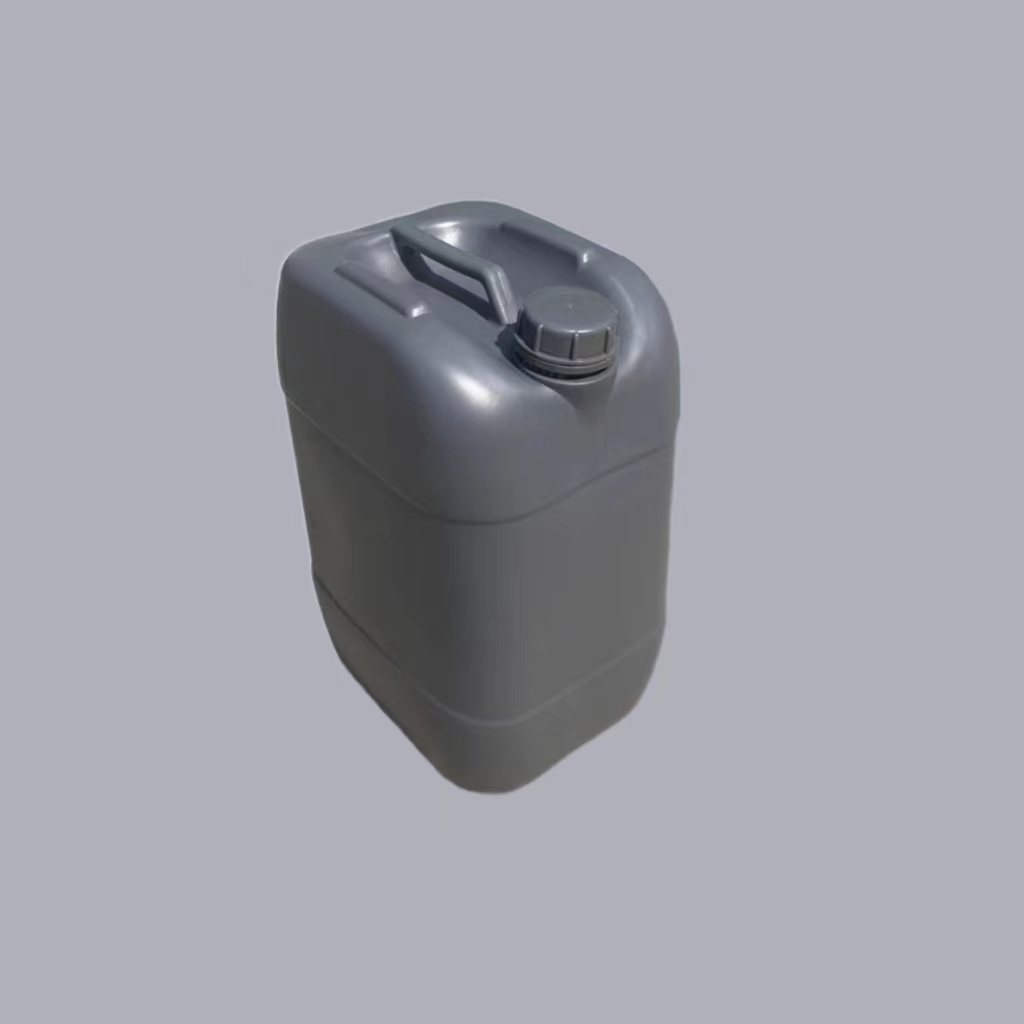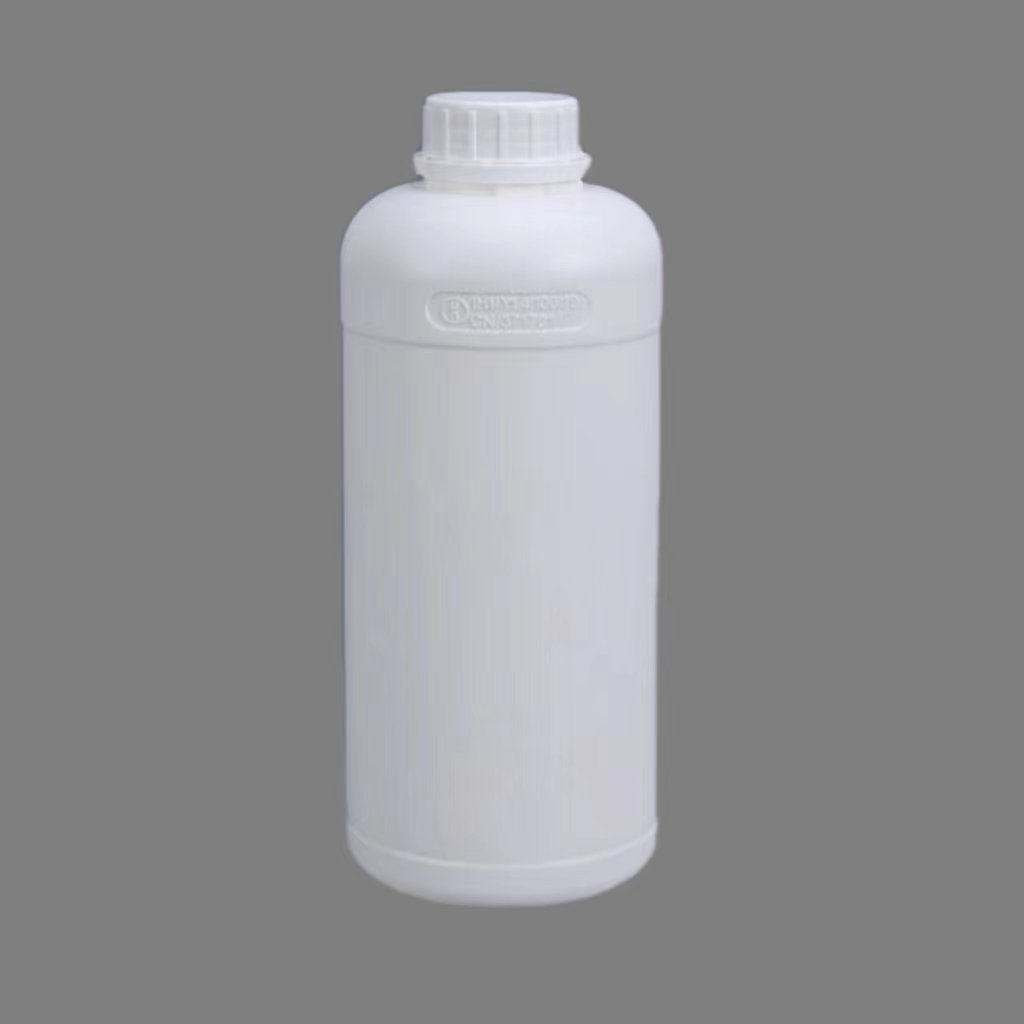

Latin American Coatings Show 2026 is the 19th edition of Mexico's national coatings, inks and surface-treatment exhibition. It ran from 21 to 23 July 2026 at Centro Banamex in Mexico City, organised by ANAFAPYT. Yolatech exhibited epoxy resins, curing agents and reactive diluents at the Mexico show.
LACS is an upstream show rather than a paint showcase. The floor is built for the supply chain that sits behind a finished coating, so raw materials, pigments and additives, resins, production equipment and application technology share the same halls. ANAFAPYT, the Mexican national association of coatings and inks manufacturers, organises the event and sets that scope.
That framing suits a resin supplier. A formulator visiting from Monterrey or Queretaro can compare a base epoxy, an anhydride hardener and a reactive diluent inside one hall, instead of crossing between unrelated trade fairs.
| LACS 2026 | Detail |
| Edition | 19th |
| Dates | 21 to 23 July 2026 |
| Venue | Centro Banamex, Mexico City |
| Organiser | ANAFAPYT |
| Exhibition space | Over 12,000 sq m |
| Scope | Raw materials, pigments and additives, resins, production equipment, application technology |
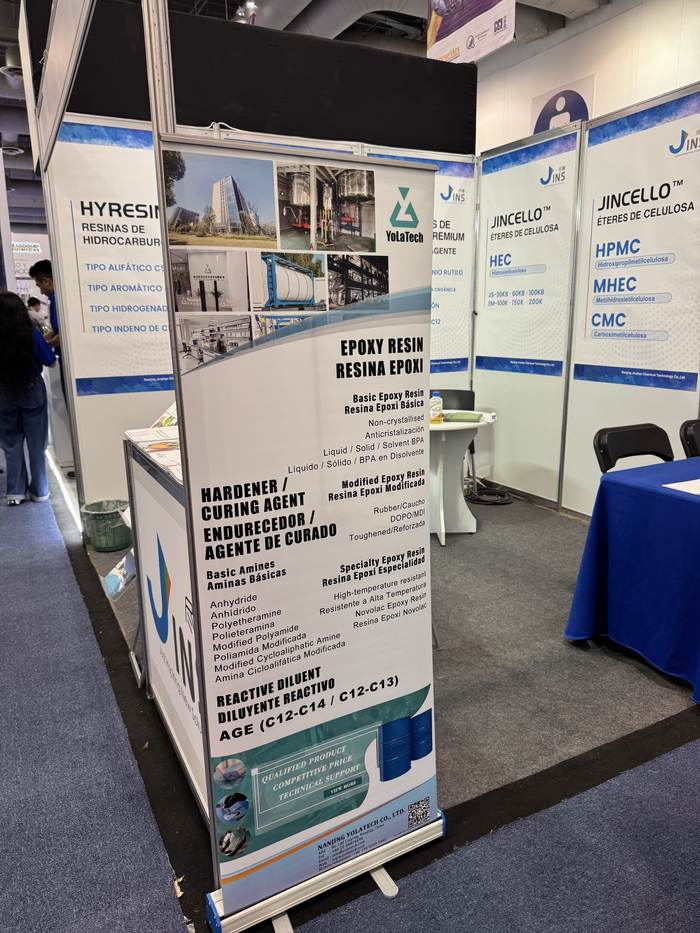
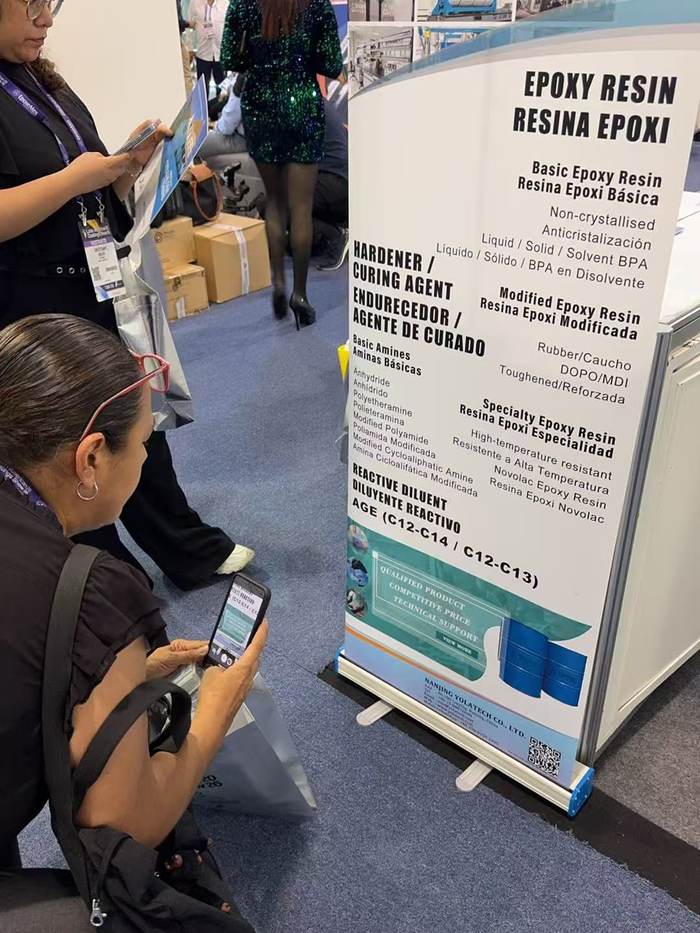
Our stand carried three product groups. Every panel was printed in English and Spanish, a deliberate choice for this market because most walk-up enquiries arrive in Spanish rather than English.
Epoxy resins were split three ways: basic, modified and specialty. The basic panel covered liquid, solid and solvent-cut bisphenol A. The modified panel covered DOPO grades for flame retardancy and rubber-toughened systems. The specialty panel covered novolac types for heat resistance. Hardener panels listed anhydride, amide and polyetheramine chemistry, and the diluent panel led with AGE (C12-C14).
| Panel group | Grade | Key data | Product page |
| Basic epoxy resin, liquid | YLE-127, YLE-128 | EEW 176 to 190 g/eq | Liquid bisphenol A epoxy resin |
| Basic epoxy resin, solid | YLE-011, YLE-901 | EEW 450 to 500 g/eq, softening 60 to 75 C | Solid bisphenol A epoxy resin |
| Basic epoxy resin, solvent cut | YLE-127A95, YLE-901K70 | Non-volatile 70 to 96 % | Solvent type bisphenol A epoxy resin |
| Modified epoxy resin, DOPO | YLDP-300-K70, YLDP-315-M75 | EEW 280 to 335 g/eq | DOPO modified phenolic epoxy resin |
| Specialty epoxy resin, novolac | YLEP-170, YLEP-172 | EEW 165 to 178 g/eq | Phenolic (novolac) epoxy resin |
| Curing agent, polyetheramine | D-230 | Amine value min. 7.5 mmol/g | Polyetheramine D-230 |
| Curing agent, anhydride | MHHPA | CAS 25550-51-0, assay min. 98 % | MHHPA hardener |
| Reactive diluent, AGE | YLD-7003 | CAS 68609-97-2, EEW 294 to 313 g/eq | Alkyl C12-C14 glycidyl ether YLD-7003 |
Traffic across the three days was steady rather than crowded. Visitors read the resin and hardener listings line by line, and several photographed the panels instead of taking a printed sheet. That habit is common at LACS, where engineers arrive with a formulation problem and want the grade numbers before the sales talk.
Questions clustered on two subjects. The first was diluent choice, because AGE (C12-C14) at 4 to 10 mPa.s cuts viscosity without the odour complaints that follow older reactive diluents. The second was hardener ratio, where visitors asked for amine value and mixing ratios for their own base resin.
 |
 |
Samples of the grades shown at Latin American Coatings Show 2026 are available for laboratory evaluation. Each grade ships with its TDS, and the COA travels with the lot, so a formulator can check EEW or assay against the certificate before scale-up.
For a coating or adhesive project, the working order is resin family first, then hardener, then diluent. Liquid bisphenol A epoxy resin and solid bisphenol A epoxy resin are the usual starting points, with solvent-cut grades where a working viscosity is needed straight from the drum. Novolac epoxy resin and DOPO modified phenolic epoxy resin cover the heat-resistant and flame-retardant ends.
Send a target EEW, viscosity or amine value and we will match it against the nearest production grade rather than the nearest listed one. Grades that were not printed on the Mexico panels usually come off the same lines.



 Поддерживается сеть IPv6