
Glycidyl methacrylate (GMA, CAS 106-91-2) is a difunctional monomer carrying one methacrylate double bond and one glycidyl ester epoxy group per molecule. Its published specification lists purity at 99% minimum, acid value at 0.05 mgKOH/g maximum and water at 0.10% maximum. It ships in closed drums.
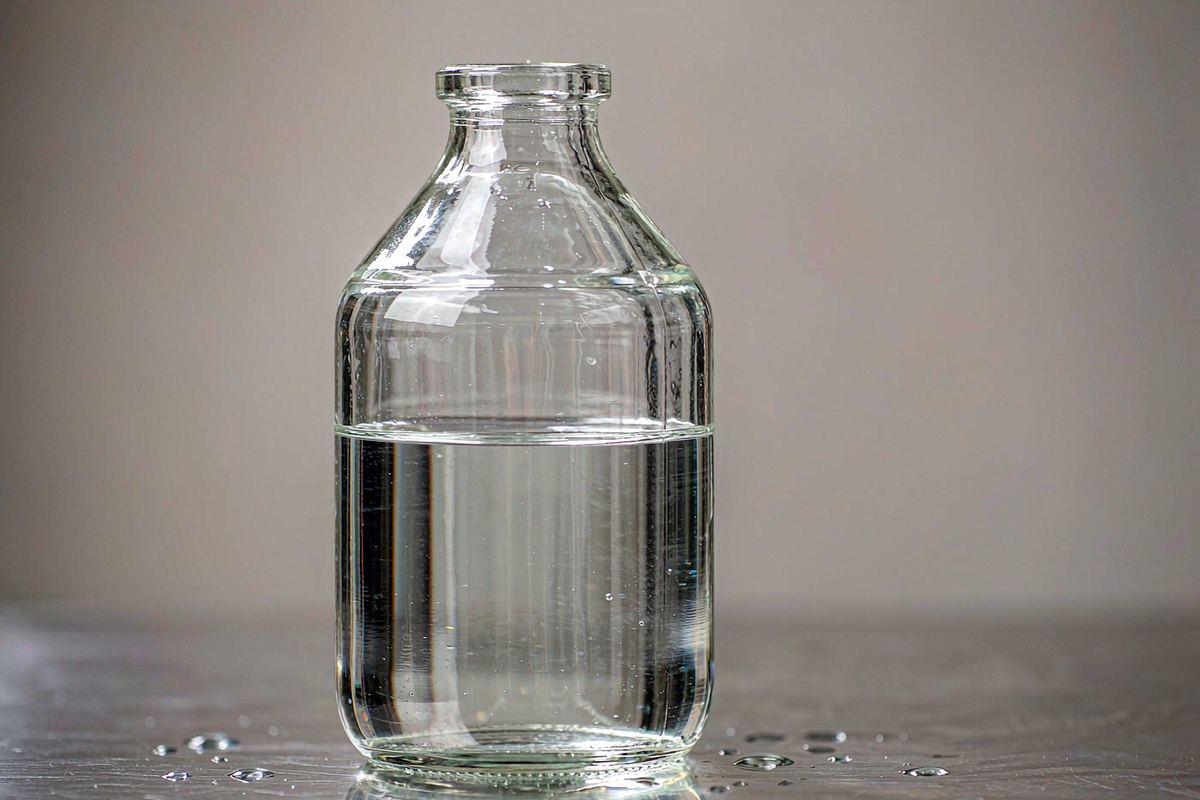
Figure 1. Glycidyl methacrylate as supplied: a colorless transparent liquid.
Product Name: Glycidyl methacrylate
Chemical Names: 2,3-Epoxypropyl methacrylate; methacrylic acid 2,3-epoxypropyl ester
CAS No.: 106-91-2
Product Category: Functional chemical / reactive monomer
Glycidyl methacrylate (CAS 106-91-2) is unusual among monomers because it carries two independent reactive sites. The methacrylate double bond polymerises by a radical route, and the glycidyl ester ring opens later. That combination places a 142.15 g/mol molecule in powder coating binders, adhesion promoters and polyolefin compatibilisers.
Two stages, then: polymerise, then crosslink.
Specification values below are quoted from the public Yolatech product page. Constants the page does not publish are marked calculated, and dosage figures are worked examples.
The product page publishes four specification items.
Table 1 merges the identity data with the published specification and adds the derived epoxide equivalent weight.
Table 1. Identity and published specification of glycidyl methacrylate (CAS 106-91-2).
Item |
Information |
Product name |
Glycidyl methacrylate |
Chemical names |
2,3-Epoxypropyl methacrylate; methacrylic acid 2,3-epoxypropyl ester |
CAS No. |
106-91-2 |
Molecular formula |
C7H10O3 (calculated) |
Molecular weight, g/mol |
142.15 (calculated) |
Reactive groups |
Methacrylate double bond; glycidyl ester epoxide |
Appearance |
Colorless transparent liquid |
Solubility |
Insoluble in water; soluble in almost all organic solvents |
Purity, % |
99 minimum |
Acid value, mgKOH/g |
0.05 maximum |
Water, % |
0.10 maximum |
Epoxide equivalent weight, g/eq |
142.15 (calculated from structure) |
Shelf life, original packing |
12 months minimum at ambient temperature |
Package |
Drum |
Three data classes are kept separate. Appearance, purity, acid value and water content are published values taken as supplied, while molecular formula, molecular weight and epoxide equivalent weight are calculated from the structure of CAS 106-91-2.
Epoxide content is titrated according to ASTM D1652 or ISO 3001, and water content is measured according to ASTM E203. Viscosity and flash point are determined by ASTM D445 and ASTM D93. Lot values appear on the batch COA.
The two reactive sites behave independently, and that independence is the design premise.
The methacrylate end copolymerises with methyl methacrylate, butyl acrylate or styrene. Methacrylate double bonds propagate more slowly than acrylates, but they also suppress the chain transfer that limits allylic monomers.
The glycidyl ester ring survives that radical step, which is what makes the two-stage route possible. Epoxides do not open under ordinary radical conditions, so a binder can be synthesised, isolated, stored and crosslinked later. In practice the ring-opening step uses carboxylic acids, amines, anhydrides or thiols, catalysed by tertiary amines such as DMP-30 or imidazoles.
Epoxide equivalent weight of the neat monomer is 142.15 g/eq, calculated from a molecular weight of 142.15 g/mol and one epoxide per molecule. In a copolymer the value scales inversely with the GMA mass fraction, and that arithmetic drives every dosage figure below.
Four monofunctional epoxides sit in the same catalogue, and only one of them can be polymerised into a radical backbone. Table 2 compares the published values.
Table 2. Glycidyl methacrylate compared with three alternative mono-epoxide monomers (property / this product / alternatives).
Property |
Glycidyl methacrylate (106-91-2) |
Allyl glycidyl ether YLD-9005 |
Glycidyl phenyl ether YLD-6001 |
Butyl glycidyl ether YLD-9004B |
Second reactive group |
Methacrylate double bond |
Allyl double bond |
None |
None |
Radical copolymerisation with acrylics |
Yes |
Limited by chain transfer |
No |
No |
Epoxide equivalent weight, g/eq |
142.15 calculated |
155-285 published |
Not published |
188-205 published |
Viscosity at 25 °C, mPa·s |
Not published |
1-7 |
2-8 |
3 maximum |
Water, % maximum |
0.10 |
0.10 |
0.10 |
0.50 |
Typical role |
Reactive monomer for acrylic binders |
Chain-transfer agent |
Aromatic reactive diluent |
Aliphatic reactive diluent |
The comparison sets the selection rule. Where a reactive diluent has to lower the mixed viscosity of a liquid bisphenol A epoxy resin system, allyl glycidyl ether YLD-9005 and glycidyl phenyl ether YLD-6001 do the job at 1-8 mPa·s. Where the requirement is a polymerisable epoxy, glycidyl methacrylate is the only one of the four that qualifies.
Dosage follows from two equivalent weights. Binder EEW = 142.15 ÷ w, where w is the GMA mass fraction in the copolymer, and crosslinker phr = 100 × AEW ÷ binder EEW, where AEW is the acid equivalent weight of the crosslinker.
Dodecanedioic acid has a molecular weight of 230.30 g/mol and two carboxylic groups, so its acid equivalent weight is 115.15 g/eq and its acid value about 487 mgKOH/g.
Table 3. Crosslinker dosage for a GMA-acrylic binder with dodecanedioic acid (AEW 115.15 g/eq), calculated.
GMA in binder, wt% |
Binder EEW, g/eq |
Diacid, phr |
Comment |
15 |
947.7 |
12.2 |
Low epoxide density, softer network |
20 |
710.8 |
16.2 |
Highest binder glass transition, lowest flow |
25 |
568.6 |
20.3 |
Common powder coating balance |
30 |
473.8 |
24.3 |
Higher crosslink density, tighter cure window |
35 |
406.1 |
28.4 |
Rarely used; binder softening point drops |
A 100 kg binder charge at 25 wt% GMA carries 25 kg of glycidyl methacrylate and has an epoxide equivalent weight of 568.6 g/eq. Stoichiometric crosslinking needs 20.3 kg of dodecanedioic acid.
Treat the ratio as a starting point. The useful window is normally 0.85 to 1.00 of stoichiometry; a slight acid excess improves flow and adhesion, while excess epoxide favours chemical resistance. When adhesion matters more than solvent resistance, 0.95 to 1.00 is the usual choice.
Five process points decide whether a GMA formulation behaves predictably.
• Inhibitor management. The monomer carries a phenolic inhibitor at the low hundred ppm level, stated on the current TDS. Radical polymerisation must overcome it, so initiator charge is set from a trial run, not theory.
• Radical step window. Acrylic copolymerisation runs at 70-110 °C. If the temperature climbs above that range, or acid or base is present, the epoxide is consumed before the backbone is finished.
• Ring-opening cure. Powder coating binders cure at 160-200 °C for 15-30 minutes. Amine or imidazole catalysis lowers the peak, but it also shortens melt pot life.
• Moisture control. Water above specification hydrolyses the glycidyl ester. Open containers and damp fillers pull the acid value out of range.
• Storage. Keep containers closed in a well-ventilated area away from flames and direct sunlight, and seal the cap immediately after use.
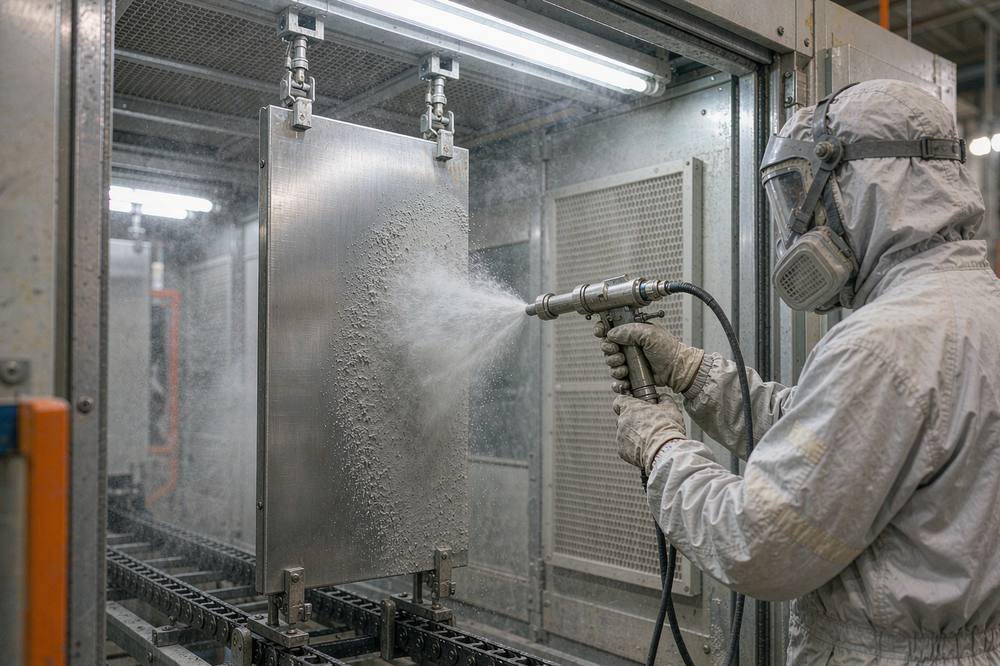
Figure 2. Electrostatic powder application, the step that precedes the ring-opening cure.
The monomer earns its place in five areas, and the loading differs by an order of magnitude between them.
Table 4. Main applications of glycidyl methacrylate and typical loadings.
Application |
Function of glycidyl methacrylate |
Typical loading |
Powder coating binders |
Epoxide reacts with a diacid during oven cure |
20-30 wt% of binder |
Adhesion promoters and primers |
Bonds to substrate hydroxyls and to the binder |
1-5 wt% on binder |
Polyolefin compatibilisers |
Grafted onto a polyolefin backbone to couple with polar fillers |
3-8 phr in the compound |
Waterborne acrylic emulsions |
Crosslinking monomer for self-crosslinking lattices |
1-4 wt% on monomer |
Polymer synthesis intermediate |
Building block for epoxy-functional polymers |
Formulation specific |
Powder coatings are the largest outlet, because a GMA-acrylic binder crosslinked with a diacid weathers outdoors without the halogenated or amine hardeners older systems used. Accelerator choice for that chemistry is covered in the note on curing additives for epoxy powder coatings.
In adhesives the monomer works as a coupling agent rather than a bulk component; a few parts in a primer improve wet adhesion to steel and aluminium, a mechanism described for epoxy resin adhesives. The same polarity shift lets a grafted polyolefin bond glass fibre in fibre-reinforced composites.
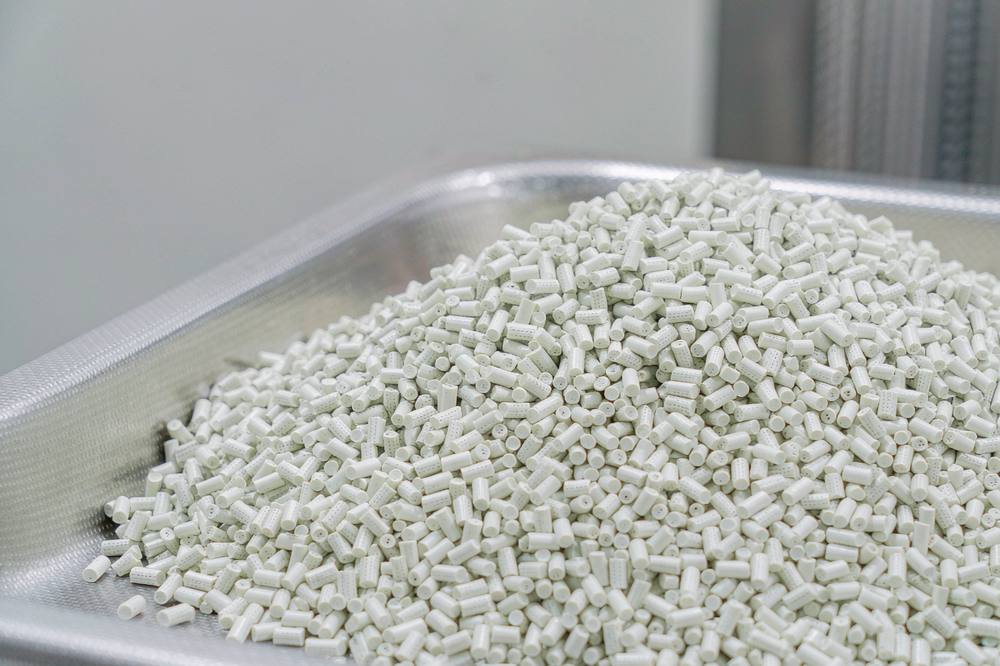
Figure 3. Glass fibre reinforced pellets, a typical end use for a grafted polyolefin compatibiliser.
The epoxide on glycidyl methacrylate is monofunctional, so the monomer cannot build a crosslinked epoxy network on its own. It is not a substitute for a liquid epoxy resin and not a curing agent. Where bulk viscosity reduction is the goal, a monofunctional glycidyl ether such as butyl glycidyl ether YLD-9004 is the route, because the methacrylate double bond contributes nothing to that chemistry.
Homopolymerisation gives a linear epoxy-functional acrylic, not a network, and crosslinking needs a separate partner. Water is the second limitation: the glycidyl ester hydrolyses to a glycol with acid catalysis, so an ageing drum loses epoxide content, and a wet filler does the same inside a formulation.
Handling is the third. The material is a skin and eye irritant and a skin sensitiser, and bulk radical polymerisation carries a runaway risk when initiator charge and cooling are mismatched.
Four checks cover most incoming lots: appearance, purity, acid value and water content. Acid value is the fastest hydrolysis indicator and the cheapest test, so it stands in for a full epoxide titration on routine receipts. Run epoxide content according to ASTM D1652 on a new supplier or after long storage. Check with the supplier before assuming a drum is still in specification.
Packaging is a drum, and shelf life is at least 12 months from the date of manufacture in the original packing at ambient temperatures. That clock holds only while the drum stays closed.
RoHS, REACH and UL 94 statements are for the customer to verify against current documentation rather than infer from a product description. Batch compliance data and safety information appear in the MSDS, TDS and COA for glycidyl methacrylate.
Neither. Glycidyl methacrylate is a functional monomer with a molecular weight of 142.15 g/mol, copolymerised into a binder or grafted onto a polymer backbone.
The calculated value is 142.15 g/eq. A copolymer containing 25 wt% glycidyl methacrylate therefore has a binder epoxide equivalent weight of 568.6 g/eq.
Acid value tracks hydrolysis. The glycidyl ester reacts with water to form a glycol and methacrylic acid, and the acid catalyses further hydrolysis, so a rising acid value signals moisture pickup.
Yes, within the operating window. Epoxides do not open under radical conditions, so the ring survives copolymerisation at 70-110 °C. It is consumed only if water, acids or bases are present.
At 25 wt% glycidyl methacrylate the stoichiometric charge is 20.3 phr of dodecanedioic acid, assuming an acid equivalent weight of 115.15 g/eq. Commercial formulations usually run between 0.85 and 1.00 of that figure.
Not for the purpose of reducing viscosity. Butyl glycidyl ether YLD-9004 is a dedicated reactive diluent with a published epoxide equivalent weight of 188-205 g/eq.
Two reactive sites on one 142.15 g/mol molecule are the whole value proposition of glycidyl methacrylate (CAS 106-91-2). The published specification is short and focused on hydrolysis control: purity at 99% minimum, acid value at 0.05 mgKOH/g maximum and water at 0.10% maximum.
The dosage follows from two equivalent weights. A binder at 25 wt% glycidyl methacrylate has an epoxide equivalent weight of 568.6 g/eq and takes 20.3 phr of dodecanedioic acid at stoichiometry. The material is a monomer and an adhesion promoter, not a resin or a hardener.
1. Yolatech product page: https://www.yolatech.com/glycidyl-methacrylate-cas-106-91-2 (accessed 2026-10-12).
2. Yolatech Technical Data Sheet, Material Safety Data Sheet and Certificate of Analysis for glycidyl methacrylate CAS 106-91-2 (available on request).
3. ASTM D1652, epoxy content of epoxy resins (EEW).
4. ISO 3001, determination of epoxy equivalent.
5. ASTM E203, water content by Karl Fischer titration.
6. ASTM D445, kinematic viscosity.
7. ASTM D93, flash point, Pensky-Martens closed cup.
8. Yolatech product page: https://www.yolatech.com/allyl-glycidyl-ether-yld-9005 (accessed 2026-10-12).
9. Yolatech product page: https://www.yolatech.com/butyl-glycidyl-etherbge-yld-9004 (accessed 2026-10-12).



 Поддерживается сеть IPv6