Zinc Rich Primer Epoxy Hardener: Phenalkamine or Polyamide?
Nov 24, 2026
A zinc rich primer epoxy hardener is the reactive part of a coating that keeps 80-90% zinc dust in electrical contact with steel. At EEW 187, a phenalkamine at AHEW 95 needs 50.8 phr and gels in 25 minutes; a polyamide at 175 needs 93.6 phr and stays fluid for 180. Salt spray cannot tell them apart.
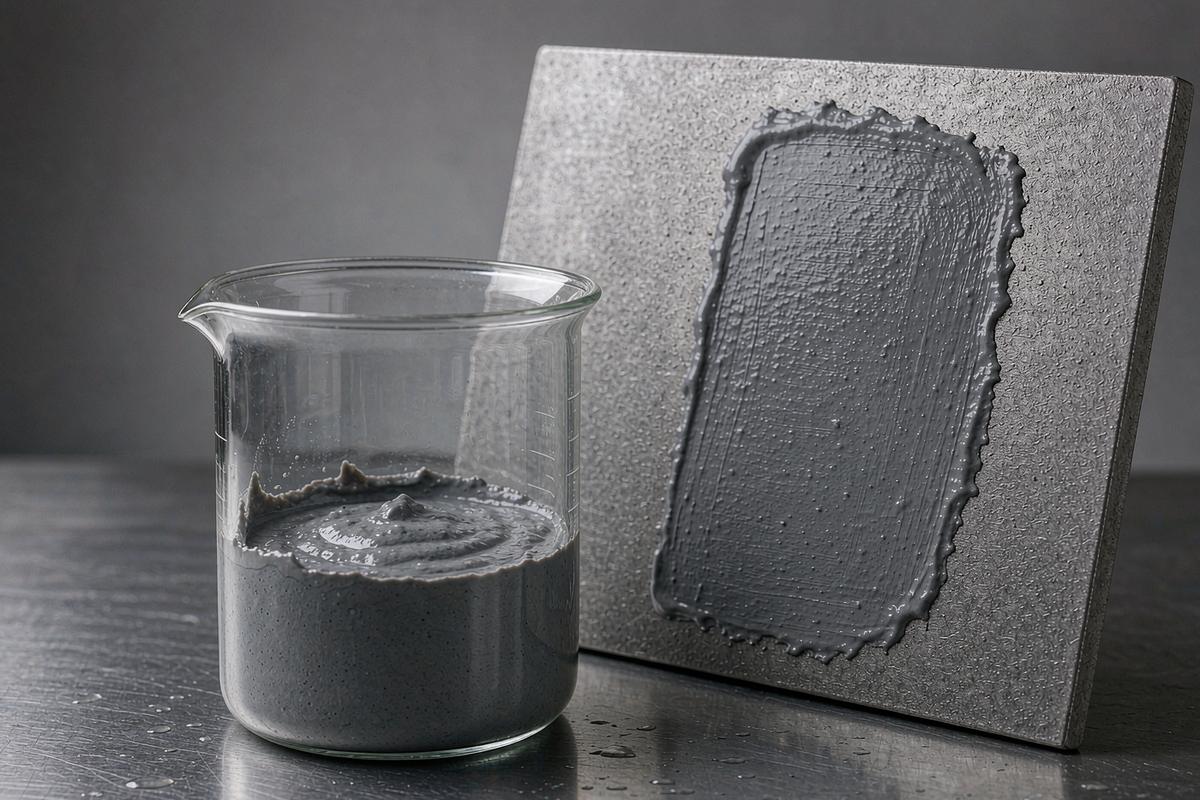
Figure 1. Zinc rich primer at 88% zinc, where the binder is 12% of the film.
1. Introduction
Galvanic protection comes from particle contact, not from the resin. The binder only has to hold zinc against steel and cure without insulating it.
Two chemistries cover most ambient-cure zinc rich primers: phenalkamines, Mannich bases built from cardanol, formaldehyde and a polyamine, and polyamides, which are dimer acid condensates. Their amine hydrogen equivalent weights differ by nearly a factor of two.
Data below are published Yolatech product-page values and 2026 catalogue entries. No salt-spray panels were exposed, and no test hours are claimed.
2. Materials and Methods: Specification of a Zinc Rich Primer Epoxy Hardener
2.1 Product Identification and Published Specification
Six hardener grades are documented well enough to calculate with. Table 1 carries published values only.
Table 1. Published specification of the six hardener grades, with phr normalised to EEW 187 resin.
Grade
Chemistry
AHEW, g/eq
Amine value, mg KOH/g
Viscosity as supplied
phr at EEW 187
Pot life, min
Set time, h
YLH-9026
phenalkamine
70
440-500
2,000-3,500 mPa·s
37.4
10-20
2
YLH-9003
phenalkamine
95
320-380
500-1,500 mPa·s
50.8
25
5
YLH-5022
polyamide
165-185
190-240
30,000-80,000 cps at 25 °C
93.6
180
10
YLH-5101
polyamide
160-200
200-240
50,000-80,000 cps at 40 °C
96.3
120
15
YLH-5022X70
polyamide, 70% solids
257
140-160
800-1,800 mPa·s
131
160
6.5
2.2 Test Methods and Data Sources
Epoxy equivalent weight would be confirmed on a received lot according to ASTM D1652, and amine value by titration per ISO 9702. Viscosity follows ASTM D445, colour ASTM D1544, and water is measured at 0.1% resolution by ASTM E203.
Two columns are calculated, not measured: phr, and the 175 and 180 g/eq midpoints. Pot life and set time are catalogue entries with no stated mix mass or film thickness, and the 25 °C and 40 °C viscosities cannot be compared directly; each was determined by the method in the current TDS.
3. Results and Discussion: Structure, Cure and Zinc Contact
3.1 Structure and Reactivity
Crosslink density separates the families before any site condition enters. AHEW 95 places one amine hydrogen pair every 95 g of hardener; AHEW 175 stretches that to 175 g. The cardanol tail buys wet adhesion: a hydrophobic C15 chain and a phenolic hydroxyl that speeds addition, which is why YLH-9003 sets in 5 h where YLH-5022 needs 10 h.
That free amine also reacts with carbon dioxide. In coastal humidity a 60-80 µm film can grow a carbamate skin within hours; the skin dissolves in water and a mid-coat over it will lift. Polyamides carry fewer free amine ends per gram, so the effect is milder but never absent.
Zinc contact is a volume question, not a weight question. At 88% zinc the binder is 12% of the dry film, and the hardener is 34% of that binder at AHEW 95 against 48% at AHEW 175. In practice a shop that coats within 24 h never sees the difference; one that stores primed steel for a month does.
3.2 Comparison with Alternative Systems
Table 2 sets both families against what a primer specification fixes.
Table 2. Property comparison for a zinc rich primer epoxy hardener at EEW 187.
Property
Phenalkamine, AHEW 95
Polyamide, AHEW 175
Hardener demand, phr
50.8
93.6
Pot life at 25 °C, min
25
180
Solvent to reach 900 mPa·s, mass %
about 20
about 32
Two-pack volume ratio
about 1.8:1
about 1:1.1
Hardener per tonne of primer, kg
40
58
Amine blush risk in humid air
high
moderate
Overcoat window at 20 °C
about 24 h
up to 7 days
4. Formulation and Dosage Calculation
Hardener demand follows one ratio: phr = 100 × AHEW ÷ EEW. On a liquid bisphenol A epoxy resin at EEW 187 that gives 50.8 phr for YLH-9003 and 93.6 phr for the YLH-5022 polyamide hardener.
Table 3. Hardener demand in phr across the published EEW band of the reference resin.
Grade
AHEW, g/eq
phr at EEW 184
phr at EEW 187
phr at EEW 190
YLH-9003
95
51.6
50.8
50.0
YLH-5022
175
95.1
93.6
92.1
YLH-5101
180
97.8
96.3
94.7
The EEW band is 184-190, a 3.2% spread that moves polyamide demand by 3.0 phr. If 94 phr is fixed and never revisited, the mix over-doses at the top of the band and under-cures at the bottom.
Zinc loading is where the two diverge commercially. Per tonne of primer at 88% zinc the binder is 120 kg, of which YLH-9003 supplies 40 kg and YLH-5022 58 kg. Eighteen kilos is small in cash, large in kit filling.
Volume ratio is the number that breaks a pump. Using typical densities of 1.16 for resin, 1.05 for phenalkamine and 0.98 for polyamide, the pack moves from about 1.8:1 to about 1:1.1. Those densities are unpublished, so replace them with COA values before setting a meter.
5. Processing Notes and Operating Window
Six field rules carry most of the risk in zinc rich work.
Induction. Give a phenalkamine 10-15 min before spraying; skip it and the pot hides a dry patch.
Heat. A 25 min pot life becomes roughly 12 min at 45 °C, so a Gulf yard needs two-component airless, not a bucket and a stirrer.
Settling. Zinc dust at 7.1 g/cm³ settles hard; recirculate the drum and stir the pot every 15 min, or the last third is binder-rich and will not protect.
Film build. Two passes to 60-80 µm; one heavy pass traps solvent in a high-PVC film and pinholes follow within the hour.
Blush. Wipe with a wet cloth before the mid-coat; if it turns milky, wash the area and let it dry.
Overcoat. Phenalkamine within 24 h at 20 °C, polyamide within 7 days; past either limit, abrade.
Figure 2. Airless application at 60-80 µm. Pot life, not gun setting, sets the practical batch size.
6. Applications
Four site conditions pull one specification in different directions. Dosages assume EEW 187 resin and 88% zinc in the dry film; at 45 °C the polyamide keeps the longer pot life of the two.
6.1 Shop Priming of Blasted Structural Steel
Holding a freshly blasted plate for six months is a hold-time job, not a corrosion job. Dosage: 93.6 phr of YLH-5022 at 60-80 µm. Failure point: overcoating past the window without abrasion, but the delamination shows in the yard, not the shop.
6.2 Ballast Tanks and Hull Interiors
Permanent humidity and wet cycling are the design case, and ventilation decides the hardener. Dosage: 50.8 phr of YLH-9003 in a tank that can be ventilated, 96.3 phr of the YLH-5101 polyamide where it cannot. Failure point: blush at the interface, and steel moisture that becomes blister cores.
6.3 Cold-Climate Site Work
Below 10 °C the families split on evidence, not chemistry. Dosage: 37.4 phr of YLH-9026, or 55-60 phr of YLH-3101, which publishes 10 h surface dry and 24 h hard dry at 5 °C on a 200 µm film. Failure point: a polyamide too slow to take a mid-coat inside the shift.
6.4 Maintenance and Spot Repair
Damp, lightly rusted steel needs surface tolerance more than speed. Dosage: 50.8 phr of YLH-9003, listed as applicable on damp and rusty surfaces. Failure point: a fast cycloaliphatic amine such as YLH-9101, which gels in 30 min and cannot wet out hand-prepared steel.
Table 4. Application, dosage and failure point at 88% zinc on EEW 187 resin.
Application
Dosage
Function
Failure point
Shop priming
93.6 phr, YLH-5022
6-month hold on plate
intercoat lift
Ballast tanks
50.8 phr, YLH-9003
humidity and wet cycling
blush under the mid-coat
Cold site work
37.4 phr, YLH-9026
cure at 5 °C
soft film, no mid-coat
Spot repair
50.8 phr, YLH-9003
wetting damp rusted steel
fast amine gels on patch
Figure 3. Primed columns waiting for a build coat. Hold time is a hardener property, not a resin property.
7. Limitations and Material Verification
7.1 Known Limits and Where the Data Stop
No salt-spray hours were generated here and none should be inferred. The catalogue calls YLH-5022 excellent in salt spray, a line with no duration or method that cannot be set against a customer's 720 h requirement.
Phenalkamine colour at Gardner 17 rules it out of light finishes, which a zinc rich primer is not.
Low-temperature evidence is thin. Only YLH-9026 (low-temperature curing) and YLH-3101 (5 °C drying times) carry an entry; no polyamide grade does. A polyamide is not wrong at 5 °C, it is unverified, and whether that matters depends on who signs the inspection report.
7.2 Incoming Verification, Packaging and Safety
Amine value is the lot check: titrate per ISO 9702 against the 190-240 band published for YLH-5022. Run it in duplicate; a 5 mg KOH/g gap between replicates usually means the sample drew moisture.
Both ship in drums and keep 12 months unopened at ambient temperature. A drum resealed in a humid yard is a different material within a season.
Zinc dust is a dust hazard and these hardeners are skin sensitisers. Handling data belong to the MSDS and COA rather than to this report; the values here serve formulation arithmetic only.
8. Frequently Asked Questions
Which zinc rich primer epoxy hardener cures at 5 °C?
A phenalkamine, on the published record. YLH-9026 is listed for low-temperature curing with a 10-20 min pot life, and YLH-3101 publishes 10 h surface dry at 5 °C. No polyamide carries a 5 °C entry.
Does the zinc loading change the hardener dosage?
No. phr is fixed by resin EEW and hardener AHEW, so at EEW 187 it stays 50.8 phr for AHEW 95 at any zinc percentage. Zinc changes binder volume, not stoichiometry.
Will a phenalkamine blush under the mid-coat?
It can, and humidity decides. Free amine plus carbon dioxide plus water gives a carbamate skin that dissolves under a wet cloth but ruins adhesion if painted over. Wash, dry, then coat.
Can a polyamide and a phenalkamine be swapped in an existing kit?
Only with a new volume ratio. The same resin takes a 1.8:1 pack at AHEW 95 and a 1:1.1 pack at AHEW 175, so a meter set for one mis-doses the other by design.
Why does the pot skin over in a hot yard?
Pot life is quoted at 25 °C. Reaction rate roughly doubles per 10 K, so a 25 min gel becomes about 12 min at 45 °C; check the batch size with the yard first.
Does the hardener decide salt-spray hours?
Only indirectly. Zinc loading, cure completeness and intercoat adhesion drive the result, and any of the three can be lost with either chemistry. Salt-spray hours have to be measured on the finished system.
9. Conclusions
Phenalkamine and polyamide are not interchangeable in a zinc rich primer, and the difference is measurable before a panel is sprayed. AHEW 95 against 175 doubles hardener demand and moves the pack from 1.8:1 to about 1:1.1.
Where steel is cold, damp or rusty, the phenalkamine carries the published evidence. Where the schedule needs a long overcoat window and the yard is warm and dry, the polyamide is the lower-risk line.
Neither chemistry changes the zinc-to-binder arithmetic: set phr from EEW and AHEW first, then zinc loading from the project specification.
10. References
1. Yolatech product page: https://www.yolatech.com/hardener-ylh-5022 (accessed 2026-11-24)
2. Yolatech product page: https://www.yolatech.com/bisphenol-a-epoxy-resin (accessed 2026-11-24)
3. Yolatech Catalogue 2026, pages 10 and 13: https://www.yolatech.com/curing-agent
4. Yolatech Technical Data Sheet and Certificate of Analysis (COA) for YLH-5022, available on request.
5. ASTM D1652, epoxy content of epoxy resins (EEW)
6. ISO 9702, amine group nitrogen content of amine epoxide hardeners
7. ASTM D445, kinematic viscosity
8. ASTM D1544, Gardner color of transparent liquids
9. ASTM E203, water content by Karl Fischer titration
Читать далее






 Поддерживается сеть IPv6