Trifunctional Epoxy Resin YLSE-0600: Cure and Dosage Guide
Oct 08, 2026
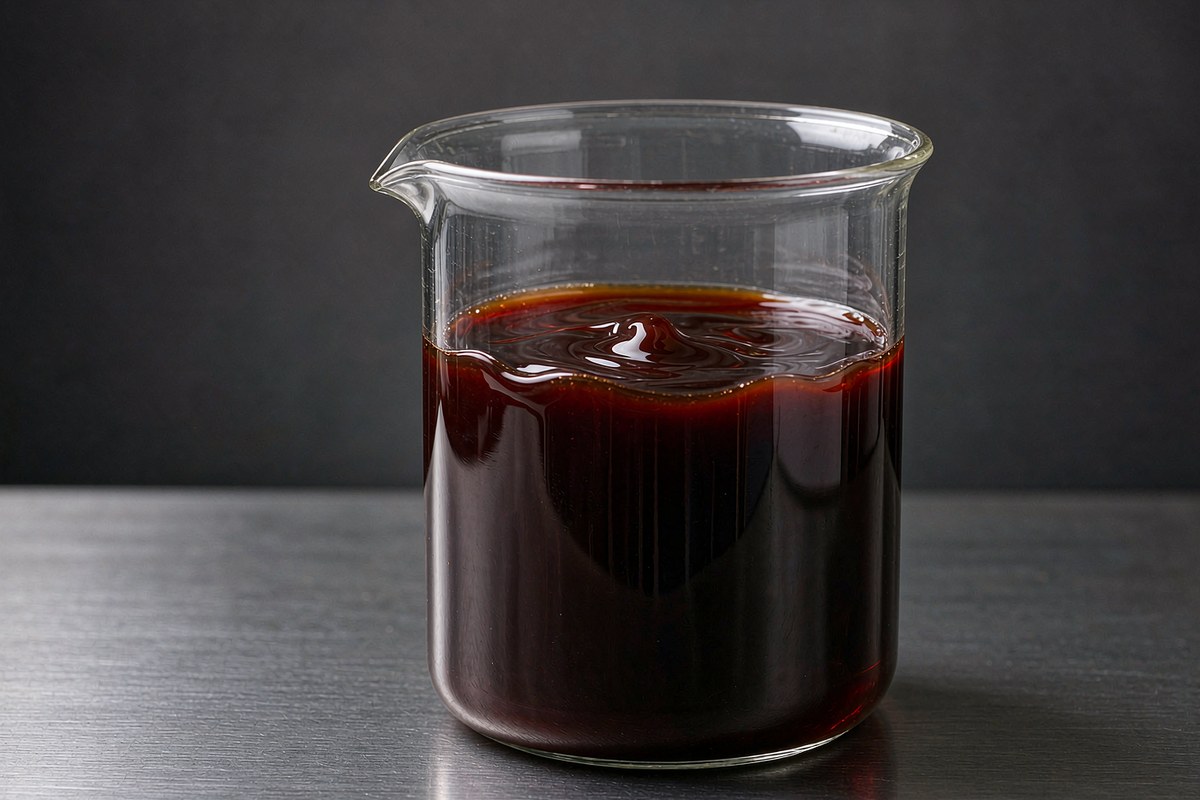
Trifunctional epoxy resin YLSE-0600 is a glycidylamine epoxy resin carrying three epoxy groups per molecule at EEW 102-110 g/eq. The resin is a reddish brown liquid of 7000-20000 mPa·s at 25 °C. CAS 71604-74-5. Formulators pick it for high-temperature composites, laminating and structural adhesives.
Product Code: YLSE-0600
CAS No.: 71604-74-5
Product Category: Multifunctional epoxy resin, glycidylamine type
1. What YLSE-0600 Is: A Trifunctional Epoxy Resin
YLSE-0600 is the Yolatech grade code for a trifunctional epoxy resin built on a 3-glycidyloxy-N,N-diglycidylaniline backbone. CAS 71604-74-5. Two of the three oxirane rings hang on the aromatic nitrogen and the third sits on the phenoxy oxygen, so one molecule offers three amine-reactive sites.
Molecular weight works out to 277.3 g/mol from C15H19NO4, which puts the theoretical epoxy equivalent weight at 92.4 g/eq. The product page lists a measured range of 102-110 g/eq. The gap is normal for a glycidylamine made via epichlorohydrin: residual oligomer and hydrolyzable chloride push EEW above theory. If a quote shows EEW below 100 for this CAS number, ask for the lot data behind it.
Table 1 gathers the identity data in one place.
Item
Information
Product code
YLSE-0600
Chemical name
3-Glycidyloxy-N,N-diglycidylaniline
CAS No.
71604-74-5
Epoxy functionality
3 groups per molecule
Molecular weight
277.3 g/mol (calculated, C15H19NO4)
Theoretical EEW
92.4 g/eq (277.3 / 3)
Measured EEW
102-110 g/eq
Appearance
Reddish brown viscous liquid
2. Published Specifications of YLSE-0600
Five parameters are published for YLSE-0600. Together they define the handling envelope.
Item
Specification
Appearance
Reddish brown viscous liquid
Color, Gardner
Max. 11
Epoxy equivalent weight
102-110 g/eq
Viscosity, 25 °C
7000-20000 mPa·s
Volatiles
Max. 1.0%
Two of the five deserve comment. A Gardner color of max. 11 means cured parts will not be water-clear; expect reddish brown castings and films. The viscosity band is also wide, so batch-to-batch flow can drift if your process is tuned tightly. Confirm each lot against the TDS or COA before locking a pump setting or a preheat temperature.
3. Why Three Epoxy Groups Change the Cure Behavior
Functionality is the whole story of this resin.
DGEBA carries two oxirane rings per molecule; YLSE-0600 carries three, and the tertiary anilinic nitrogen left after glycidylation accelerates the neighboring epoxy-amine reactions. The practical result is a resin that gels faster and builds crosslink density sooner than a bisphenol A grade of comparable viscosity.
The product page states the failure mode plainly: even moderate amounts, when cured with aliphatic amines, can develop enough exotherm to char the mass and evolve smoke. That is not boilerplate. A 500 g trial batch of a fast trifunctional epoxy can run away where a 2 kg batch of DGEBA would barely warm.
Higher crosslink density usually buys higher glass transition temperature and better hot strength. Yolatech does not publish a Tg figure for YLSE-0600, so treat Tg as formulation-specific: it depends on the hardener, the cure schedule and the post-cure. Verify it on your own laminate before writing a datasheet claim.
4. YLSE-0600 Against Difunctional and Tetrafunctional Alternatives
The comparison below uses only parameters published on the Yolatech product pages.
Property
YLSE-0600 (this resin)
YLE-128 (bisphenol A)
YLSE-721 (tetrafunctional)
Epoxy groups per molecule
3
2
4
EEW, g/eq
102-110
184-190
105-120
Viscosity, mPa·s
7000-20000 at 25 °C
11000-15000 at 25 °C
3000-7000 at 50 °C
Color
Gardner max. 11, reddish brown
not published
Gardner max. 10, light yellow
Volatiles / water
max. 1.0%
not published
max. 0.6%
Backbone
aromatic glycidylamine
bisphenol A ether
aromatic glycidylamine
Where does that leave a buyer? If you can heat the resin bath to 50 °C and want maximum crosslink density, YLSE-721 tetrafunctional epoxy resin is the stronger molecule. If you want the lowest hardener demand and the widest supply base, a standard liquid DGEBA is the cheaper answer. YLSE-0600 sits between the two: three epoxy groups per molecule, no heating demanded by the datasheet, and a color that rules out clear finishes.
Against a standard liquid DGEBA such as liquid bisphenol A epoxy resin YLE-128, the trade is clearer still: YLSE-0600 asks for far more amine hardener by weight but returns a tighter network. For a phenolic backbone, PNE type phenolic epoxy resin YLEP-631 averages 2.7 epoxy groups per molecule; YLEP-638 semi-solid novolac epoxy resin is its higher-viscosity sibling, usually used in solution.
5. Hardener Dosage: Worked Examples
The stoichiometry rule is short: phr = 100 × AHEW / EEW.
AHEW values below come from the hardener product pages where published; where a page lists none, the value is theoretical or derived from the amine value.
Table 4 covers six hardener families with the dose recalculated at both ends of the resin EEW band.
Hardener
AHEW, g/eq
phr at EEW 102
phr at EEW 110
Source of AHEW
Diethylenetriamine DETA
20.6
20.2
18.7
theoretical, 5 active H
PACM diamine
52.5
51.5
47.7
theoretical, MW 210.4 / 4
MACM amine hardener
60
58.8
54.5
product page
DETDA aromatic diamine
approx. 44.6
43.7
40.5
derived from amine value 625-640 mg KOH/g
Polyetheramine D-230
approx. 66.7
65.4
60.6
derived from amine value min. 7.5 mmol/g
Polyamide hardener YLH-5101
160-200
157-196
145-182
product page
For the same DETA on YLE-128 at EEW 184-190 g/eq, the dose drops to about 10.8-11.2 phr. YLSE-0600 therefore consumes roughly 75% more amine by weight per 100 parts resin. That is a real cost line, not a rounding error, and it belongs in your formulation economics next to the gain in crosslink density.
Two cautions. These are stoichiometric starting points; in practice many aliphatic-amine systems run at 0.85-0.95 of the theoretical dose to control blush and exotherm. And check the arithmetic against your own certificate of analysis — if the COA says 107 g/eq, use 107, not the midpoint.
6. Cutting Viscosity Without Losing Functionality
At 7000-20000 mPa·s, YLSE-0600 wets fiber well but will not self-level at room temperature.
Reactive dilution is the standard fix, and the log rule gives a serviceable first estimate: blend viscosity falls roughly geometrically with diluent share. The diluent candidates below are published on the Yolatech site with their own viscosity and EEW.
Diluent
EEW, g/eq
Viscosity, mPa·s
Note for use with YLSE-0600
Butyl glycidyl ether YLD-9004A
147-157
max. 2 at 25 °C
strongest thinning per part; monofunctional
C8-10 alkyl glycidyl ether YLD-7004
220-250
3-10 at 25 °C
gentler, needs more parts for the same drop
Resorcinol diglycidyl ether YLD-6010
117-129
40-100 at 40 °C
aromatic, keeps heat resistance
Trimethylolpropane triglycidyl ether YLD-6012
135-145
100-200 at 25 °C
trifunctional, preserves network density
Pentaerythritol glycidyl ether YLD-6013
125-173
100-800 at 25 °C
tetrafunctional character, wider EEW band
Take 70 parts of YLSE-0600 at 15000 mPa·s with 30 parts of YLD-6012. The log blend lands near 3300-4100 mPa·s, workable for most impregnation equipment. Blend EEW rises to about 114 g/eq, so the DETA dose falls from 19.4 to 18.0 phr. Both numbers move; recompute both.
Dilution is not free. Every part of monofunctional diluent removes reactive sites from the network, and hydrolyzable chloride from the diluent transfers into your system. For electronic work, check the diluent TDS for the chloride line first.
7. Processing Notes and Exotherm Control
Batch size is your main exotherm control.
• Pre-warm the resin to 40-50 °C before metering if your equipment allows it; as a rule of thumb, epoxy viscosity drops roughly by half for every 10-15 °C of heating.
• Keep trial batches under 200 g until the gel behavior of your chosen hardener is known.
• Aliphatic amines are the fast path and the fast failure; aromatic amines, MHHPA methyl hexahydrophthalic anhydride with an accelerator, or dicyandiamide systems trade speed for thermal margin.
• Mix ratio errors show up as undercure in the core of a casting, not at the surface, so log actual weighed amounts rather than trusting pump settings.
• Close the container tightly after drawing; the storage instruction matters more in a humid coastal workshop.
When a casting chars or smokes, check batch size first, then hardener choice, then resin quality. In that order.
8. Applications of This Trifunctional Epoxy Resin
The product page names six application fields for YLSE-0600: high temperature resistant composites, laminating, resin modification, adhesives, coatings and electronics. Each field below maps to the published data.
Application
Why this resin fits
Numbers behind the judgment
High-temperature composites
three epoxy groups per molecule build a dense network
EEW 102-110 g/eq; viscosity 7000-20000 mPa·s suits preheated impregnation
Filament winding and laminating
wets fiber after preheat
Gardner max. 11 is acceptable on black carbon fiber parts
Structural adhesives
fast strength build-up with amine hardeners
DETA dose approx. 19-20 phr at EEW 106 g/eq
Resin modifier
small additions raise crosslink density of DGEBA systems
10-30 phr as a modifier is the usual working band
Coatings
chemical resistance from the aromatic amine backbone
plan on pigmentation; the resin itself is reddish brown
Electronics
used where heat resistance matters more than clarity
volatiles max. 1.0%
For clear or light-colored work, the honest answer is that Gardner max. 11 is a limitation. YLSE-186 alicyclic glycidyl ester epoxy stays at Gardner max. 2 with EEW 100-111 g/eq, at the price of a different cure profile. For a bisphenol F backbone with lower viscosity, bisphenol F epoxy resin YLE-170 runs 3500-4500 mPa·s but carries only two epoxy groups per molecule.
9. Frequently Asked Questions
Can YLSE-0600 replace a bisphenol A resin one for one?
No. Swapping YLE-128 for YLSE-0600 roughly doubles the amine dose, from about 11 phr to 19-20 phr of DETA, and gel time shortens. Pot life, exotherm and mix viscosity all move with it. If a plant meters both grades on the same pump, recalibrate the ratio before the first shot.
How much amine hardener does YLSE-0600 need?
phr = 100 × AHEW / EEW. At the EEW midpoint of 106 g/eq, that gives 19.4 phr for DETA (AHEW 20.6), 49.5 phr for PACM (AHEW 52.5) and 56.6 phr for MACM (AHEW 60). Use the EEW printed on your own COA, not the midpoint; the published band spans 102-110 g/eq.
Why does YLSE-0600 cure faster than a bisphenol A epoxy?
Three reasons stack up: a third epoxy group per molecule, a tertiary anilinic nitrogen that accelerates the adjacent epoxy-amine reaction, and a low EEW that packs more reactive sites into every 100 g. The downside is heat. Cured with aliphatic amines, even moderate batches can exotherm hard enough to char and smoke, so scale up slowly.
Can I thin YLSE-0600 with a reactive diluent?
Yes, and the log rule estimates the blend viscosity well enough for pump selection. Roughly 30 parts of YLD-6012 per 70 parts of YLSE-0600 brings 15000 mPa·s down to the 3300-4100 mPa·s range. Butyl glycidyl ether thins harder per part; C8-10 alkyl glycidyl ether needs more. Whatever you pick, recompute the hardener dose from the blend EEW.
What is the shelf life and storage condition for YLSE-0600?
Shelf life is normally 6 months from the date of manufacture in the original packing at suitable temperatures. Store in a well-ventilated area, keep the drum away from flames and direct sunlight, and close the cap tightly immediately after use. If a drum has sat through a hot summer, check viscosity against the COA before charging the tank.
Is YLSE-0600 suitable for clear coatings?
It is not. A Gardner color of up to 11 in a reddish brown liquid will read through any clear film. Use it where the part is pigmented, black or hidden inside a laminate. If clarity matters, YLSE-186 with its Gardner limit of 2 is the closer match.
10. Packaging, Storage and Safety
YLSE-0600 ships in drum packages. Shelf life is normally 6 months from the date of manufacture in the original packing at suitable temperatures.
Store in a well-ventilated area, away from flames and direct sunlight, and close the cap tightly immediately after use. Full safety and handling information is provided in the Material Safety Data Sheet.
All parameters quoted here come from the YLSE-0600 product page and should be reconfirmed against the TDS, MSDS or COA of the lot you actually receive. Nothing in this article overrides those documents.
Читать далее






 Поддерживается сеть IPv6