Low Halogen Epoxy Resin: 128K, 128L and 128P Chlorine Tiers
Nov 19, 2026
Low halogen epoxy resin in the YLE-128 series is a liquid bisphenol A diglycidyl ether sold in three chlorine tiers. YLE-128K carries 1000 ppm of total chlorine, YLE-128L 700 ppm and YLE-128P 300 ppm, at a common EEW of 165-175 g/eq and 3500-5500 mPa·s. Hydrolyzable chlorine is 300, 200 and 100 ppm.
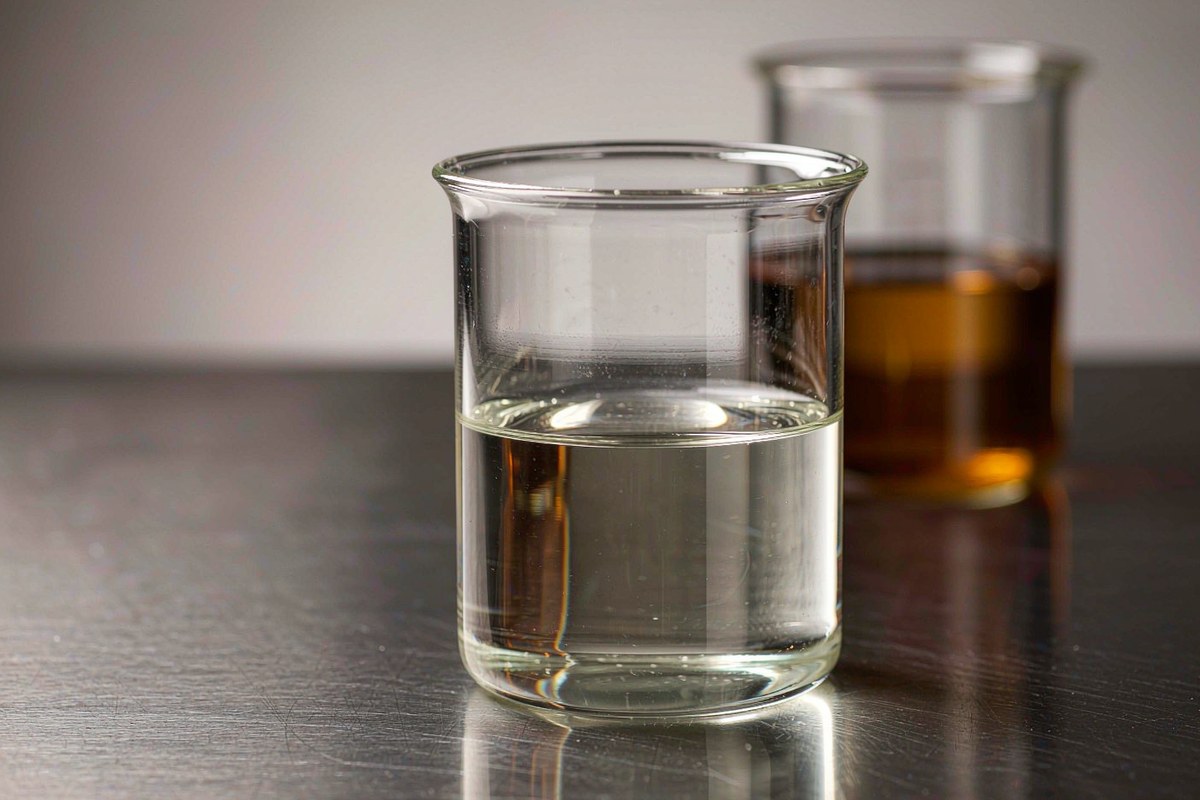
Figure 1. A low chlorine grade in front of a general purpose resin; colour and chlorine are separate specifications on different scales.
1. Introduction
Insulation resistance rejects a potting compound before mechanical strength does. Chlorine left from the epichlorohydrin route becomes mobile chloride ion once moisture is present, and migrates under bias. A grade sold as low halogen epoxy resin is bought on a chlorine number, not a colour number.
The YLE-128 series splits one chemistry into three chlorine ceilings. This report compares the three grades on published data, follows the chlorine into the cured compound, and states when the loosest tier is right.
2. Materials and Methods: How a Low Halogen Epoxy Resin Is Specified
2.1 Product Identification and Specification
YLE-128K, YLE-128L and YLE-128P share one backbone and one viscosity band; only the chlorine line moves. The liquid bisphenol A epoxy resin page publishes no CAS number for any of the three, so it is recorded as not published.
Table 1. Published limits for the three chlorine tiers.
Item
YLE-128K
YLE-128L
YLE-128P
CAS No.
Not published
Not published
Not published
Total chlorine, ppm
≤ 1000
≤ 700
≤ 300
Hydrolyzable chlorine, ppm
≤ 300
≤ 200
≤ 100
EEW, g/eq
165-175
165-175
165-175
Viscosity at 25 °C, mPa·s
3500-5500
3500-5500
3500-5500
2.2 Test Methods and Data Sources
Epoxy equivalent is determined by titration according to ASTM D1652 or ISO 3001, viscosity at 25 °C according to ASTM D445, colour according to ASTM D1544 and water by ASTM E203. Chlorine is the exception: the page states limits, not the method, so read every chloride figure as determined by the method in the current TDS.
Two conventions sit side by side: the column headed Hy-Cl reports hydrolyzable chlorine, while the catalogue line for the same grades reports total chlorine. Both are lot limits, not measurements on the sample in front of you. Run incoming checks in duplicate, and add a third determination with n = 3 near a ceiling.
3. Results and Discussion: Chlorine, Purity and the Viscosity That Follows
3.1 What the K, L and P Suffix Controls
The letters K, L and P mark total chlorine ceilings of 1000, 700 and 300 ppm, not hydrolyzable chlorine. Hydrolyzable chlorine for the same grades is 300, 200 and 100 ppm, about 30% of the total in each case.
The mapping is a house convention, not a quirk of one family: YLE-130K, 130L and 130P repeat it exactly. Confirm the number on the batch COA.
Total chlorine counts every chlorine atom, including the fraction bound into chlorohydrin end groups that will never ionise. The hydrolyzable figure counts only what is released as chloride under test, which is the part able to migrate. A limit written against the wrong one survives right up to the failed qualification run.
An EEW of 165-175 g/eq is low for a bisphenol A liquid, and it signals purity rather than a formulation trick. Pure diglycidyl ether of bisphenol A sits at a theoretical 170.2 g/eq; a general purpose grade at 184-190 g/eq carries a tail of higher oligomers. Cutting that tail drops the equivalent weight and the viscosity to 3500-5500 mPa·s from 11000-15000 mPa·s.
The band straddles that theoretical value, and 165 g/eq falls below it. Treat the low end as a window edge, not a measured composition.
3.2 Comparison with Alternative Systems
YLE-128 is the grade most buyers already run, and on chlorine it is the weakest of the four: 500 ppm hydrolyzable against 300, 200 and 100. It is also about three times more viscous, so a formulator adds a diluent to reach potting viscosity, and the diluent brings its own chlorine.
Table 2. Property comparison of YLE-128K against the general purpose YLE-128 and the lower viscosity YLE-127.
Property
YLE-128K
YLE-128
YLE-127
EEW, g/eq
165-175
184-190
176-184
Viscosity at 25 °C, mPa·s
3500-5500
11000-15000
8000-11000
Total chlorine
≤ 1000 ppm
Not published
Not published
Hydrolyzable chlorine
≤ 300 ppm
≤ 500 ppm
≤ 500 ppm
Colour limit
Gardner 1
APHA 50
APHA 50
Changing the backbone reaches the same viscosity by another route. A bisphenol F epoxy resin such as YLE-170L runs 900-2000 mPa·s at EEW 155-165 with hydrolyzable chlorine below 200 ppm. The trade is heat resistance.
4. Formulation and Dosage Calculation
Hardener demand follows phr = 100 × AHEW ÷ EEW. All three grades share one EEW band, so one table covers them; the hardener moves the number more than the tier does.
Table 3. Hardener demand in phr across the EEW band, calculated from AHEW values.
Hardener
AHEW, g/eq
phr at EEW 165
phr at EEW 170
phr at EEW 175
DETA (calc)
20.6
12.5
12.1
11.8
YLH-9101
92
55.8
54.1
52.6
YLH-3101
110
66.7
64.7
62.9
Chlorine dilutes once the hardener goes in. A compound at 12.1 phr carries 100/112.1 of the resin's chlorine, a 10.8% cut. That cannot move a system one tier.
Table 4. Hydrolyzable chlorine carried into the cured compound.
System
Resin Hy-Cl, ppm
phr added
Compound Hy-Cl, ppm
YLE-128K + DETA
300
12.1
268
YLE-128L + DETA
200
12.1
178
YLE-128P + DETA
100
12.1
89
YLE-128 + DETA
500
11.0
450
YLE-128P + 10 phr YLE-115J
100
10.0
773
Read the last row twice. Ten parts of a BGE modified grade, itself listed at 6000-9000 ppm hydrolyzable, lifts YLE-128P to 773 ppm. If the diluent is not on the chlorine budget, the tier you bought is a guess.
In molar terms the tiers separate further. At EEW 170 a kilogram holds 5.88 epoxy equivalents, so YLE-128P carries one hydrolyzable chlorine per 2,085 epoxide groups and YLE-128K one per 695.
5. Processing Notes and Operating Window
A viscosity of 3500-5500 mPa·s at 25 °C pours without dilution, removing the usual reason to add a diluent. Four points decide whether that survives to the potting line.
• Hold the drum at 25-30 °C before dispensing; at 20 °C the same resin is noticeably thicker and a static mixer will starve.
• The catalogue calls these grades crystalline, and in practice a cold drum can throw crystals. Re-melt at 50-60 °C with rolling, never a hot spot, and mix the whole drum before sampling.
• Opened drums pick up water. Water is measured by ASTM E203, and a wet batch foams during vacuum degassing; if a drum stood open overnight, degas longer.
• Gel time for YLH-9101 is 30 min at 100 g and 25 °C on EEW 190 resin. EEW 170 reacts faster, so re-time it in your own cup.
Figure 2. Controlled re-melt on a steel drum; a band heater and rolling are the standard remedy for crystallised grades.
Degas before potting, not after. A 3500 mPa·s compound releases air slowly, and a 2 mm casting holds bubbles for minutes.
6. Applications
All three grades share one application list: composite, electronic potting and electronic adhesives. What separates them on a purchase order is the end customer's incoming inspection.
Table 5. Starting tier by application, with the variable that actually decides the purchase.
Application
Starting tier
Limiting variable
Distribution transformer potting
YLE-128P
Chloride limit on cured part
LED driver encapsulation
YLE-128L
Optical clarity and colour
Ignition coil potting
YLE-128L
Thermal cycling
General industrial casting
YLE-128K
Cost per kilogram
Filament winding composite
YLE-128K
Fibre wet-out at 3500 mPa·s
Figure 3. Filling a coil housing; air release sets the fill rate, chlorine decides whether the unit passes.
7. Limitations and Material Verification
7.1 Known Limitations and Where These Grades Do Not Fit
Low chlorine is not halogen free, and the gap is commercial. YLE-128P is specified at 300 ppm total chlorine, but no halogen free certificate appears on the page. A buyer who needs one should test the cured part to their own standard.
Two naming traps follow these grades. The catalogue calls them crystalline, yet the crystalline epoxy resin range on the same site is a family of solids melting at 50-115 °C. Colour traps too: YLE-128K is Gardner 1 while YLE-128 is APHA 50, and the two scales cannot be compared across a row.
Three gaps remain. No CAS number, no density or flash point and no electrical data are published, so volume resistivity, dielectric loss and tracking index cannot be quoted. The 2026 catalogue also gives YLE-128 an EEW of 184-194 g/eq where the page says 184-190.
7.2 Incoming Verification, Packaging and Safety
Incoming inspection covers hydrolyzable chlorine, EEW, viscosity at 25 °C and water. Test chlorine first, because it is the property being bought. Test EEW second, because a shifted EEW moves the hardener dose. When a lot arrives cold, let it reach 25 °C before sampling.
Packaging is a steel drum with at least 12 months shelf life at ambient temperature in the original packing. Keep drums from flame and sunlight, and close the cap after use; the page and the MSDS use the same wording.
Safety follows the MSDS. Uncured bisphenol A epoxy resins are skin sensitisers, and nitrile gloves with forearm coverage are the minimum for drum work. Request RoHS and REACH declarations as documents; the specification is not a claim.
8. Frequently Asked Questions
Is YLE-128K the same resin as YLE-128 with a different label?
No. YLE-128K shares the diglycidyl ether backbone but is a higher purity cut: EEW 165-175 g/eq against 184-190 g/eq, viscosity 3500-5500 mPa·s against 11000-15000 mPa·s, and 1000 ppm total chlorine against a 500 ppm hydrolyzable limit.
Does the K, L or P suffix mean 1000, 700 and 300 ppm of hydrolyzable chlorine?
Not quite. Those figures are total chlorine ceilings. Hydrolyzable chlorine is 300, 200 and 100 ppm for K, L and P, so a hydrolyzable limit maps to a different letter.
Which grade should go into a distribution transformer?
Start with YLE-128P when the end customer inspects chloride on the cured part, YLE-128L when the limit is written against the resin. YLE-128K only makes sense at a 1000 ppm total limit.
Can a standard resin be diluted down to the same chlorine level?
No, dilution adds chlorine rather than removing it. Diluents and BGE modified grades carry their own load, and one grade in the same catalogue runs 6000-9000 ppm hydrolyzable.
Why is the EEW lower than a general purpose 128?
A narrower oligomer distribution. Pure diglycidyl ether of bisphenol A sits at 170.2 g/eq, while the 184-190 band reflects a tail of higher oligomers that also drives viscosity to 11000-15000 mPa·s.
Do these grades come with a halogen free certificate?
No certificate is claimed. The grades are specified by chlorine content, and the page makes no halogen free statement. Test the cured part to the standard your customer cites, or request a per batch declaration.
9. Conclusions
Three grades, one chemistry, one variable. YLE-128K, YLE-128L and YLE-128P differ in total chlorine at 1000, 700 and 300 ppm, with hydrolyzable chlorine at 300, 200 and 100 ppm; nothing else in the published specification moves. Selection follows the customer's chloride limit and the basis it is written on, resin or cured compound.
The largest chlorine source in a potting formulation is often the diluent added to reach viscosity, and the 3500-5500 mPa·s band removes the need for one.
Values quoted above are specification limits from the public product page and the 2026 catalogue, not certificates for a specific lot. Confirm grade, chlorine tier and packaging against the TDS, MSDS and COA supplied with the order before releasing material to production.
10. References
1. Yolatech product page, liquid bisphenol A epoxy resin series: https://www.yolatech.com/bisphenol-a-epoxy-resin (accessed 2026-11-19).
2. Yolatech Technical Data Sheet (TDS) for YLE-128K/128L/128P, available on request.
3. Yolatech Certificate of Analysis (COA) per production lot, chlorine and epoxy equivalent.
4. ASTM D1652, epoxy content of epoxy resins (EEW).
5. ISO 3001, determination of epoxy equivalent.
6. ASTM D445, kinematic viscosity.
7. ASTM D1544, Gardner color of transparent liquids.
8. ASTM E203, water content by Karl Fischer titration.
Читать далее






 Поддерживается сеть IPv6